Tuesday, December 4, 2012

Dutch Hunger Winter


Stress damages us long before we are aware.

The Dutch Hunger Winter was a famine that took place in the German-occupied part of the Netherlands, especially in the densely populated western provinces above the great rivers, during the winter of 1944-1945, near the end of World War II. A German blockade cut off food and fuel shipments from farm areas to punish the reluctance of the Dutch to aid the Nazi war effort. Some 4.5 million were affected. It was one of those rare events to which psychologists pay attention to. It would be unethical to intentionally starve people for a long period of time, but since it happened naturally, it have psychologists the opportunity to perform a case study that helped us understand humans better, in the means of stress and its long-term effects. 

Because of excellent health care infrastructure and record keeping in the Netherlands, epidemiologists have been able to follow the long term effects of the famine. The Dutch survivors were a group of individuals all of whom suffered for the same exact period of time of malnutrition.


The babies who were born small stayed small all their lives, which showed in lower obesity rates and lower average weight of the people.  For forty or more years, those people had access to as much food as they wanted, and yet their bodies never got over the early period of malnutrition. More unexpectedly, the children whose mothers had been malnourished only early in pregnancy had higher obesity rates than normal. Recent reports have shown a greater incidence of other health problems as well, including effects on certain measures of mental health. Even though those individuals had seemed perfectly healthy at birth, something had happened to their devel­opment in the womb that affected them for decades after. And it wasn't just the fact that something had happened that mattered, it was when it happened. Events that take place in the first three months of gestation, a stage when the fetus is really very small and developing very rapidly, can affect an individual for the rest of their life.

Event the grandchildren of the women who were malnourished during the first three months of their pregnancy, seem to be affected. So something that happened in one pregnant population affected their children’s children.

Epigenetics is the new discipline that is revolutionizing biol­ogy. Whenever two genetically identical individuals are nonidentical in some way we can measure, this is called epigenetics. When a change in environment has biological consequences that last long after the event itself has vanished into distant memory, we are seeing an epigenetic effect in action. And can take prime example in victims of the Hunger Winter. Their DNA didn’t change (mutate), and yet their life histories altered irrevocably in response to their environments.

Our bodies respond to famine like they do to other stressors. This leads to the conclusion that stress hormones in the mother’s blood, triggered a change in the nervous system of the fetus. The stress they went through even before their life began, left scars for the rest of their life. Not only with the way their body stores fat, but also with the way they respond to everyday stress. Many children were found to be highly susceptible to mental disorder, with higher risks for cardiovascular disease, and lowered immunity. 

Sunday, September 16, 2012

Types of Experiments.

In Psychology, there are many ways to obtain data. The big three are:


Field 
They are conducted in the everyday, or natural environment of the participants, but situations are artificially set up.
The experimenter manipulates the IV, but in a real life setting, so hence he has no control over extraneous variables.

Strengths:

  • High in ecological validity
  • Participants are unaware of the experiment - avoid demand characteristics
Limitations:

  • Experiments are much harder to control confounding variables
  • Time consuming experiments, and expensive 

In field experiments it is not usually possible to gain informed consent from the participants and it is difficult to debrief the participants.


Laboratory Experiments
The features of this kind of experiment is that it takes place in an environment designed to maximize control over extraneous variables to help ensure the validity of the study. The environment is  well-controlled, and accurate measurements are possible.

The researcher decides where the experiment will take place, at what time, with which participants, in what circumstances and using what procedures. You can more easily eliminate confounding variables, and get clear results.

Strengths:
  • It is usually the method with the highest level of reliability
  • It allows valid cause-effect conclusions in terms of the variables measured because of the certainty gained by control over extraneous variables.

This precision then allows for easy replication of the experiment, which makes it more likely to be checked and confirmed by other researchers.

Limitations:
  • Too high level of control over variables, which means that the whole situation become artificial or unrealistic.
  • Ecological validity is low, and results cannot be generalized beyond the experimental situation.
 
Natural (quasi)
A quasi experiment is where the independent variable is not manipulated by the researcher but occurs naturally.
 
In a true experiment participants are allocated to the conditions of an experiment, usually through random assignment, however this is not always possible for practical or ethical reasons.
In a quasi experiment the researcher takes advantage of pre-existing conditions such as age, sex or an event that the researcher has no control over such as a participants’ occupation.
 
Strengths:
  • A strength of quasi experiments is that that they are taking part in an investigation
  •  May not be as artificial as laboratory experiments.
Limitations:
  •  harder to establish causal relationships (because the independent variable is not being directly manipulated by the researcher.)
It is worth noting that quasi experiments are very common in psychology because ethically and practically they are the only design that can be used.

Friday, September 7, 2012

Ethics in Psychology

        Ethics are very important when carrying out any type of psychological research. Researchers have a moral responsibility to protect research participants from harm. The code of ethics in psychology provides guidelines for the conduct of research. Some of the more important ethical issues that it addresses are as follows:
  • Informed Consent, as in,before the study begins the researcher must outline to the participants what the research is about, and then ask their consent (i.e. permission) to take part.
  • Honesty, meaning that participants must be given information relating to the purpose of the research, procedures involved, all possible risks and discomforts to the subject, benefits of the research to society and possibly to the individual human subject, as well as length of time the subject is expected to participate and a person to contact for answers to questions or in the event of injury or emergency.
  • Debriefing, as the subjects must be given a general idea of what the researcher was investigating and why, and their part in the research should be explained. They must be told if they have been previously deceived and given reasons why. They must be asked if they have any questions and those questions should be answered honestly and as fully as possible.
          However, ethics in psychology research have been disregarded until relatively recently. Many studies were conducted that lacked ethics, leading to psychological or physical harm to the participants. Due to the fact that it was not thought of as wrong to simply test on people to see what happens, there are many studies  that violate even a higher level of ethical misconduct then described before. The following two violate ethics in the whole sense of the world, not just psychology.


The Monster Study of 1939

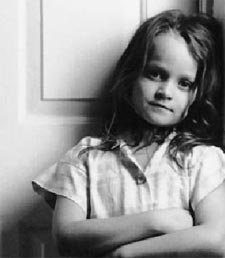
sad girl
The Monster Study was a horrid experiment done on 22 orphan children in Davenport, conducted by Wendell Johnson at the University of Iowa. Johnson supervised the experiment of his graduate student, Mary Tudor. They choose to experiment on children at a nearby orphanage, and placed them in either control or experimental groups. Tudor gave positive speech therapy to half of the children, praising the fluency of their speech, and negative speech therapy to the other half, belittling the children for every speech imperfection and telling them they were stutterers. Many of the normal speaking orphan children who received negative therapy in the experiment suffered negative psychological effects and some retained speech problems during the course of their life. This experiment seems highly unethical to me, because you are experimenting with human beings to prove a theory. Other then the fact that they are orphans, and have no one to take care of them and protect them, the subjects were also children, who cannot have much control or say in situations. It is unethical to give them no say, and not care if their lives are marked with trauma, or actual speech impairment as a result. I could bet that nobody was informed of their rights during the experiment, and no care was taken care of them. Ethically speaking, this study can be compared to bulling or child abuse.

.


The Aversion Project of the 1970s and 1980s

BAGHDAD, IRAQ, MARCH 4:  US army soliders from 4/42 Field Artillery Battalion march during a transfer ceremony in the heavily fortified Green Zone area March 4, 2009 in Baghdad, Iraq. The 4/42 Field Artillery Battalion has transferred their responsibilities to the US army 118th Infantry Unit. U.S President Barack Obama announced last week that he will pull the majority of U.S. military forces from Iraq by August 2010South Africa’s apartheid army forced white lesbian and gay soldiers to undergo ‘sex-change’ operations in the 1970′s and the 1980′s, and submitted many to chemical castration, electric shock, and other unethical medical experiments. Although the exact number is not known, former apartheid army surgeons estimate that as many as 900 forced ‘sexual reassignment’ operations may have been performed between 1971 and 1989 at military hospitals, as part of a top-secret program to root out homosexuality from the service.
Army psychiatrists aided by chaplains aggressively ferreted out suspected homosexuals from the armed forces, sending them discretely to military psychiatric units. Those who could not be ‘cured’ with drugs, aversion shock therapy, hormone treatment, and other radical ‘psychiatric’ means were chemically castrated or given sex-change operations. Although several cases of lesbian soldiers abused have been documented so far—including one botched sex-change operation—most of the victims appear to have been young, 16 to 24-year-old white males drafted into the apartheid army.
In my eyes, this is wrong beyond limits. This study completely disregarded ethics, and used soldiers as guinea pigs to see if homosexuality can be cured. Other then the fact that most of them were drugged, shocked and psychologically traumatized beyond respectful human behavior, the soldiers that were refusing to submit themselves, had physical operations done to them, in the means of a sex change, without their approval. Imagine a young man, in his 20's, signing up for the army to help his country and make his family proud. Not only is the army a stressful enough, and psychologically challenging situation, they accused men of being gay, and in my eyes tortured them, without any reason. If you didn't want gays in the army, let them go home.
 

Tuesday, June 5, 2012

Anything about Aaron Beck.

Who is Aaron Beck ?
Aron Temkin Beck (born July 18, 1921) is an American psychiatrist and a professor in the department of psychiatry at the University of Pennsylvania. He is widely regarded as the father of cognitive therapy, and his pioneering theories are widely used in the treatment of clinical depression.

In 1997 Beck discovered key idea's in Cognitive Behavioral Therapy, he explains different disorders were associated with different types of distorted thinking.Distorted thinking has a negative effect on our behavior no matter what type of disorder, he explains that successful interventions will educate a person to understand and become aware of their distorted thinking and how to challenge its effects. Beck discovered that frequent negative automatic thoughts reveal a persons core beliefs. He explains core beliefs are formed over lifelong experiences; we “feel” these beliefs to be true.


His Cognitive Triad Theory consists of; negative views of yourself, negative views of the future and negative views of the world. These views come from negative schema that have built up throughout childhood consisting of past experiences in practical and emotional events. This may include parental criticism, criticism from teachers and family members and peer rejection. This theory links with the social learning / behavioral approach.For example, a person fails an exam, his negative views would be the following:
                              Negative view of self - "I'm a failure"
                              Negative view of the world - "Everyone is against me"
                              Negative view of the future - "I'll never be good at anything"
The view of the self in this case could affect the view of the future as they don't believe they can change. Alternatively they may believe that because everyone is against them (negative view of the world) that makes them a failure.


His Cognitive Behavioral Therapy is a form of psychotherapy in which the therapist and the client work together as a team to identify and solve problems. Therapists use the Cognitive Model to help clients overcome their difficulties by changing their thinking, behavior, and emotional responses. It has found to be useful in many fields of psychology, such as depression, anxiety disorders, eating disorders, and substance abuse, among others, and it is currently being tested for personality disorders. It has also been demonstrated to be effective as an adjunctive treatment to medication for serious mental disorders such as bipolar disorder and schizophrenia.

CBT is one of the most effective treatments for depression and is a way of talking about how you think about yourself, your environment and the people within it. Using CBT you can also discuss what it is that affects your thoughts and feelings. Once you understand the factors that are causing your depression, CBT can help you make positive changes to overcome it. As a treatment for depression, the CBT helps you to change how you think ('Cognitive') and what you do ('Behaviour'). These changes can help you to feel better. Unlike some of the other talking treatments, it focuses on the 'here and now' problems and difficulties. Instead of focusing on the causes of your distress or symptoms in the past, it looks for ways to improve your state of mind now.

Tuesday, March 13, 2012

Trait Theory of Personality

The Trait Theory of Personality suggests that individual personalities are composed of broad dispositions. The primary focus of the trait theory of personality is to identify and measure individual personality characteristics. A trait is thought of a stable characteristic that causes individuals to behave in a certain manner.
Cardinal Traits are traits that hold significant dominance over a person's personality, to the point that the individual becomes known for these traits. They are rare and develop later in life, and take over the individual's personality. Central Traits are general characteristics that form the base of one's personality. Although they are not as dominant as Cardinal Traits, they are a mayor characteristic for a person. They are the characteristics you might use to describe an individual with, such as intelligent, frank, serious or honest. Secondary Traits are related to the attitudes and preferences of an individual. They usually appear in certain situations and under specific circumstances. The differences between these traits implies how much power a trait holds over an individual. The most common criticisms to the trait theory are that we cannot use it to predict one's future behavior, and its role holds no explanation of a personality's development, and does not consider the change of negative aspects of a trait. Hence, without understanding how a trait develops, we cannot possibly know how to change it, and change our behavior.
On the other hand we have the Five Factor Model of Personality. It claims that much of what we need to know about an individual's personality can be captured by their standing on the five measurable personality factors or traits. The five factors of this model are openness to experience, conscientiousness, extroversion, agreeableness, and neuroticism. Openness to experience is considered in the means of intuitive and curious vs. consistent and cautious. Typically individuals that score low on the scale are considered  to be down to earth and practical. They hold traditional beliefs and are sometimes described as "plain and straight forward". On the other hand, high scorers are considered to be imaginative and creative, open to experience and sensitive to beauty.
Conscientiousness is considered to hold efficient and organized vs. easygoing and careless. Low scorers are said to be easygoing, unreliable and sloppy. They are described as spontaneous and care free. High scorers are considered organized, tidy and striving. They are self disciplined, dutiful and aim for achievement. Extroversion is the scale between people who are outgoing and energetic, compared to those who are solitary and reserved. People that score low on this scale are reserved, serious and passive. They are often described as "low-key" and deliberate. On the other end, high scorers are usually outgoing, active and sociable. They are engaged in the external world and enthusiastic. Agreeableness considers the tendency to be compassionate and cooperative. Low scorers are hostile, selfish and cold. They are considered to hold self interest over getting along with others, and are less likely to extend themselves to other people. Individuals with high scores are said to be kind, trusting, warm and altruistic. They value getting along with others and hold an optimistic view on human nature. The last trait is neuroticism, which measures how likely you are to experience negative emotions. People who score low  are relaxed and even tempered. They are said to be less likely to get upset, calm and emotionally stable. High scorers are considered emotional, moody and impulsive. They are more susceptible to stress, and their negative mood lasts for a longer time. This scale represents two extremes, and most people fall somewhere in between the two polar ends of each dimension.  Two strengths of McCrae and Costa's five factor model of personality is their objectivity and easy use and understanding. McCrae and his colleagues have also found that the big five traits are remarkably universal. One study that looked at people from more then fifty different cultures found that the theories dimensions could be accurately used to describe the participant's personality. Another food trail of the big five is that it provides an easy continuum with a great deal of information with regards to one's personality, interactions, and beliefs about their self as well as the world.

Stereotyping

The "stereotype threat" is a negative stereotype, and its effects on performance. This is an example of the performance impairment that results when individuals asked to carry out an task are made aware of a negative stereotype held against them regarding their group's ability to preform well in that task. It is scary how even with the slightest manipulation we can find proof for this theory. For example, if you simply tell female participants, before they take a math test, that males usually do better in math, then this will lead to deterioration of female performance in the test. Or if you make older participants aware of their age, they will perform significantly worse on their memory tests, then members of the same age who haven't been reminded of this internal stereotype. Any strong stereotype category that a person belongs to, such as sex, age, or race is susceptible to negative, but also positive stereotype influence. It was shown that positive stereotype reinforcement may be just as powerful as any negative threat. If you invoke a positive stereotype, such as college students are good at math, or older people have more experience, the targeted groups mentioned above can actually better scores then they normally would.  Researchers have determined that stereotypes can have an huge impact on those that they target. It is not anymore about the feeling, not just harmless words. The power of a stereotype is so strong that it can overwhelm many of our traits,  which then results in the saying: you're only as good as you expect to be.


Tuesday, March 6, 2012

Social Identity Theory


The videos we watched in class showed how in 1968, Jane Elliott, a teacher in a small, all-white Iowa town, divided her third-grade class into blue-eyed and brown-eyed groups and gave them a daring lesson in discrimination. Most of the children in the Class Divided exercise have been friends, playing around on the playground and getting along well.  The children accepted the views that their teacher gave them, that blue eyed people were superior then brown eyed people. This way, groups of power differences were created, and the class was split in half. Within minutes, the blue eyed kids started to work with this new fact, and discriminate. The children started calling the out-group "brown eyes" as an insult. They were teasing them, separating from them, and suggesting that if the brown eyed people get out of hand, to use a ruler to tame them. The effect was real. During recces, one of the brown eyed children felt so much hurt, and so put down by being in the worse group, that he hit one of his classmates - a kid he was probably a best friend with the day before. This exercise teaches us many lessons. It shows how hurtful, and real life prejudice and discrimination are, but it also shows many interesting psychological aspects of our behavior. The social identity theory as well as minimal group paradigm help explain what actually happened. The children were very easily convinced of their status. Their in-group - "we"- and their out-group - "them"- were clearly stated, and reacted upon. The blue eyed kids were the in-group, believing that they are similar to each-other, but that the out-group, the brown are kids, are all the same, and completely different form them. After all, they were told that blue eyed people were smarter, and better. After a while, the kids were pointing out these differences too. This resulted from their social comparison, and resulted in the outbursts that were clearly their way of showing positive distinctiveness. They pointed out the inter-group differentiation, and after a while, would clearly in-group favoritism. Everything the brown eyes did was because they were "stupid", and the brown eyes weren't fighting at all, they accepted their group and role. 

*This takes you through only one of the days of the experiment, the day when blue eyed people were on the top.

Wednesday, January 25, 2012

How to work a placebo.

Through the use of placebos, it is becoming clear that our mind has an even greater influence on our daily lives then we thought, influencing not only our perceptions, but also our well- being. The placebo, which is Latin for "to please", is usually thought of as a sugar-pill, that is given under the impression of being a medication thought to treat an ailment. The use of placebos has shown us that the mind has tremendous potential to induce physiological changes in our body based solely on our perceptions. For example, if we swallow a sugar pill thinking that it is Advil, we may actually physically feel fewer symptoms of headache or other pain, as a result of our mind's perception. A placebo is a substance or a procedure that activity has no effect on the condition being treated. When we use a placebo, to cure for an example, it is not the placebo that causes the effect. The consequence of  using it are very real physical responses created by our mind, and generating very real benefit or result. The placebo effect is today seen as an important part of the healing process. Although some ethical questions are asked on this subject, in my opinion it is a natural way for you to heal. Would you rather be filled with chemicals and and drugs, or heal with the power of your mind? A placebo offers, in most cases, the therapeutic effect, without the risk of negative side effects. I think it is more ethical then most things out there, and that healing the patient in any way, is healing. And many cases have been found where medicine did not help, but a placebo did. It has power. The ethics issue was probably created by drug companies, who would be more than happy to get rid of the idea of the placebo effect. However, the word is out and more and more incredible stories are being shared about the power to heal ourselves.  It’s all in what we believe.
Here is a summary of a placebo:
Our brain anticipates outcomes, and anticipation produces those outcomes. The placebo effect is basically a self-fulfilling prophecy, and it follows the patterns predicted, as if the brain was indeed, producing its own desired outcomes. Researchers have found the factors that we should play up on.
• Placebos follow the same dose-response curve as real medicines. Two pills give more relief than one, and a larger capsule is better than a smaller one.
• Placebo injections do more than placebo pills.
• Substances that actually treat one condition but are used as a placebo for another have a greater placebo effect that sugar pills.
• The greater the pain, the greater the placebo effect. It's as if the more relief we desire, the more we attain.
• You don't have to be sick for a placebo to work. Placebo stimulants, placebo tranquilizers, even placebo alcohol produce predictable effects in healthy subjects.
 Nowadays, a placebo is mostly used in medical research, placebos are given as control treatments along with legitimate substances to measure it's the drugs actual effectiveness.  Placebos are mostly used to replace painkiller or in depression treatments.
A placebo is very effective - if you truly believe.             

Wednesday, January 11, 2012

The Placebo Effect.

 A placebo is a simulated or otherwise ineffective treatment for a disease or other medical condition intended to deceive the recipient. Sometimes patients given a placebo treatment will have a perceived or actual improvement in a medical condition, a phenomenon commonly called the placebo effect
An article titled Placebo Effect: How it works explained an experiment done to test the strength of placebos. They gathered 300 subjects with headaches, and divided them into three groups of 100.  The first group was given no treatment, or explanation. The second group was told that they are testing a super drug, notably better then and faster as a pain reliever, while they were actually given aspirin with codeine, a proven old school pain reliever. The third group was told the same thing, but instead they received placebo sugar pills. After an hour, 20 people of the first group said that their headaches were gone. In the second group, 90 said that they are cured - they have never had a better medicine. In the last, "placebo" group, 55 people did not have headaches anymore. Taking into consideration that in the treatment free group - group one- , headache pain ceased in 20 percent of subjects after one hour regardless, the results show that 35 percent of the subjects in the experiment stated that the sugar pill was just as much a miracle drug as the painkiller the members of the second group received. A sugar pill has no physiological action that will cure a headache, but the headache-free subjects in the third group provide evidence to the contrary.  This "cure" in the absence of any truly therapeutic agent is the placebo effect, and it's more than a curiosity. It's a direct result of brain action.. The placebo effect is not a deception or self-delusion. The people whose headaches disappear after ingestion of the sugar pill are not lying, cheating, simple-minded, or insane. Their pain disappears--and not because they consciously wish it to. "The human brain anticipates outcomes, and anticipation produces those outcomes. The placebo effect is self-fulfilling prophecy, and it follows the patterns you'd predict if the brain were, indeed, producing its own desired outcomes".  The physical changes are real. The placebo effect is self-fulfilling prophecy.
The article reveals many interesting research findings, such as the fact that placebos follow the same dose-response curve as real medicines. Two pills give more relief than one, and a larger capsule is better than a smaller one. Or the fact that the greater the pain, the greater the placebo effect. It's as if the more relief we desire, the more we attain.The article also raised an interesting relation of the placebo effect to the topic of overall perception. "The placebo effect is not a single phenomenon, but the result of the complex interplay of anatomical, biochemical, and psychological factors. The same can be said for all our perceptions, I suspect. We see, hear, taste, touch, and smell pretty much what we expect to."It is agreeable that this effect, just like our perception, is a trickery, and creates the world of our reality. What you truly believe in, is the truth for you. 


Friday, December 9, 2011

PTSD Treatments

Post Traumatic Stress Disorder can be helped. Today, a good amount of treatments are available for PTSD. This anxiety disorder may cause a lot of people to keep closed up, but therapy and counseling may actually be one of the best ways to improve their condition.Cognitive behavioral therapy, or CBT, is one type of such counseling. In cognitive therapy, a therapist helps patients understand and change how they think about the trauma and its aftermath. The goal is to understand how certain thoughts about their trauma cause stress and make the symptoms worse. According to the National Institute of Mental Health  "Cognitive Behavioral Therapy is a form of psychotherapy designed to help a person develop a more adaptive response to a fear" (NIMH-CBT). The NIMH states that "CBT is a blend of two therapies: cognitive therapy (CT) and behavioral therapy (BT)" (NIMHs-CBT). As a combination of the two, CBT emphasizes the important role of thinking in how we feel and what we do.Trauma-focused cognitive-behavioral therapy, involves carefully and gradually “exposing” yourself to thoughts, feelings, and situations that remind you of the trauma. Therapy also involves identifying upsetting thoughts about the traumatic event–particularly thoughts that are distorted and irrational—and replacing them with more balanced picture.
Another way to help deal with severe anxiety and PTSD are medical drugs. Another possibly effective treatment are medications. For example, selective serotonin reuptake inhibitors (SSRIs), which are a type of antidepressant medicine, may be used. These help people be less sad and worried. They appear to be helpful, and for some people they are very effective. SSRIs include citalopram (Celexa), fluoxetine (such as Prozac), paroxetine (Paxil), and sertraline (Zoloft). They often work, because chemicals in your brain affect the way you feel. For example, when you have depression you may not have enough of a chemical called serotonin. SSRIs raise the level of serotonin in your brain.
Medications are often used to help speed up another treatment that the patient is receiving,  and increase the efficiency in the overall response to a treatment. Often, medications are used as a way to help a patient calm down, so that they are able to go through therapy which will help them on a greater level.Medications, therefore, are often paired with psychological treatments for PTSD, such as cognitive-behavioral therapy. On their own, medications and psychotherapy may be effective; but by pairing them together, their effectiveness is maximized.

Monday, November 21, 2011

Post Traumatic Stress Disorder

Selective nature of memory has often helped us thrive; our very survival may depend upon learning the lessons from life-threatening episodes, just like it did hundredths of years ago. However, our ability to selectively remember traumatic episodes can also harm us. Seven percent of the general population suffers from Post Traumatic Stress Disorder. Post Traumatic Stress Disorder (PTSD) is a form of an anxiety disorder. It usually occurs after you have been through a traumatic event, or events that are life threatening or devastating, bear strong negative emotions or cause intense fear.An interesting fact is that women are twice as likely as men to develop PTSD.
Virtually any trauma, defined as an event that is life-threatening or that severely effects the physical or emotional well-being of a person and causes intense fear, may cause PTSD. Such events often include either experiencing or witnessing a severe accident or physical injury. It can be divided into three main categories: 
Direct experience - such as military combat, kidnapping or a violent personal assault (sexual assault, physical attack, robbery, mugging etc.)
Witnessed situations - including the observing the serious injury or unnatural death of another person due to violent assault, or unexpectedly witnessing a dead body or body parts.
Learned events - meaning events that do not happen to you, and you do not witness, but are tragic to those around you. When you learn of a serious accident, or a serious injury experienced by a family member or close friend, even learning about the sudden death of a loved one.
Experienced any of the mentioned events? You might have PTSD if you develop the specific symptoms.
There are different levels of symptoms for traumatic disorders such as PTSD. Some basic symptoms include re-experiencing of the event, such as flashbacks or nightmares. A more serious step from this is avoidance and fear of anything that may resemble or remind them of the trauma. This also brings on lack of interest for life circumstances. Most striking  symptoms include hyperarousal, inability to sleep, and irritability all the time.


Although you might fall into some of the mentioned categories, do not be in distress as there are different levels for traumatic experiences. They include the following:
Both memory and emotion relate to PTSD, as it is a highly negative and emotional experience that can cause you this disorder. It is important to face your memories, and overcome the emotions that stop you from living a normal life. This disorder also effects your memories and emotions of the future. Not only can it cause you to heavily distress your emotional state, it can also affect the formation of future memories. Research reveals the fact that people who have been exposed to extreme stress, and traumatic experiences sometimes have a smaller hippocampus, compared to people who have not been exposed to trauma. The hippocampus is a region of the brain that plays a very important role in memory. This is significant in understanding the effects of trauma in general and the impact of PTSD, specifically since the hippocampus is the part of the brain that is thought to have an important role in developing new memories about life events.

Friday, November 18, 2011

Flashbulb Memory

What is flashbulb memory?
Flashbulb memory is related to the circumstances surrounding your reception of the news1 with confidence and in vivid detail. You can think of it as a "snapshot" of the moment that was surprising, as well as significant to you.
Evidence has shown that although people are highly confident in their flashbulb memories, the details of the memories can be forgotten, and they do not significantly vary from normal memories. The proposal of the Flashbulb Memory theory by Brown and Kulik set a lot of research and studies into motion.

In three following posts, three mayor studies will be explained related to this topic.
They include:
  • Brown & Kulik (1977)
  • Neisser & Harsch (1992)
  • Talarico & Rubin (2003)

Thursday, November 17, 2011

Attack on a memory: Talarico and Rubin.

The study of Talarico and Rubin of 2003. The aim of it was to determine, whether flashbulb memory had any more detail compared to normal memories, after certain periods of time.  In this study, the participants were asked to recall the events of the Word Trade Center attack on September 11, 2001. They were asked various questions on four different occasions; 1, 7, 42 and 224 days after the attack. However, this study also tested the memory of an ordinary event that happened at around the same time of the attack. They found out that the flashbulb memory remained very vivid throughout the study, as well, participants were very confident about their accuracy. However participants reported the ordinary memories becoming less and less vivid and reliable, even though objectively they could remember no more details about September 11. From this we can conclude that although we might feel that flashbulb memory is more clear, and remembered, it turns out that flashbulb memories are no different from other memories. Limitations of this study were not so many of as of the previous ones, as ordinary memory was tested, however, it is still a memory related to a powerful event. In order for this to be even more accurate, memory should be checked of an ordinary day, with no exceptional disaster or powerful attack that might remind you of it.

Race to Space: Neisser and Harsch

Neisser and Harsch also conducted an experiment when questioning the effectiveness of flashbulb memory. In 1992, they asked 106 participants to answer questions about the circumstances of their learning of the Challenger space shuttle disaster. Among the questions, five asked about how they heard the news: where they were, what they were doing, who told them, what time it occurred, and so on. Thirty-two months later the participants were asked to answer the same questions again, and their results compared to the original.On the day after the disaster, 21% of the participants stated that they heard about the event on T.V. However, after thirty-two months, the percentage rose to 45%. The findings showed that memories had in fact dimmed, yet the participants were not aware, and still very confident about the accuracy of their questions. This suggests that flashbulb memory is not reliable. From this study we can see that what is different between normal memories and flashbulb memories, is most likely the confidence that people have in their memories associated with significant events.One weakness of this study is the fact that there was no control group in the experiment. This is a significant downside, as you cannot make a comparison between normal memories and flashbulb memories.

    The killing of doubt: Brown & Kulik


    The Brown and Kulik study of 1977, was the first modern psychological study of Flashbulb Memory. In their theory, these memories are kept through continued rehearsal in the form of discussion, or "re-living" the event. The theory was that these memories are more emotional, and therefor more vivid, last longer and more accurate. The aim of their study was then to investigate whether dramatic, or personally significant events cause flashbulb memories. The study was conducted using a questionnaire, asking 80 American participants to asses the memories of when they learned a shocking personal and social events, and how often they used to recall them. Nine of the events, for example, were assassinations of well known American personalities. The findings of this study showed that flashbulb memories were more likely to occur in unexpected and personally relevant shocking events. The assassination of J.F. Kennedy in 1963 led to the highest results, with more then 90% of the participants recalling the event in vivid detail. What we can infer from this study is that dramatic events can cause memories to form a memory of the event; which was clearly consistent with Brown and Kulik's theories. Some limitations on this study is the fact that the data was collected through questionnaires, so it would be very difficult to verify the accuracy of the memories, or responses given by the participants.

    Sunday, November 13, 2011

    Emotion of Anger.

    Emotion can sometimes be the results of our thoughts.Any event that occurs in our life, can be thought about in a negative, or a positive light. A video on Seneca, the ancient philosopher, thought that we can learn to prevent certain emotions from getting the best of us, if we are prepared. In his belief, emotions come from our cognitive evaluations of situations. He believed that the emotion of anger, is a result of a fact that we are unprepared for the little everyday annoyances that life supplies us with. We do not think pessimistic enough, or not at all about all the things that could go wrong - we are not prepared for anything but the good. When something that we do not plan occurs, we feel surprised, and as a result of that we often feel disappointed, helpless and angry. This connects to the theory of emotions of Lazarus. His theory states that a thought must be processed, before any emotion can be detected. In other words, you have to think about the situation you are in - either in a positive, negative or neutral way -  before you can experience emotion. What both of these men hint at is the fact, that your emotion rise from your thoughts on the specific emotion. And you can change your thoughts, so your emotions have to be changeable as well. Basically, the same idea has risen, in different time periods. Could it have something to it? What Seneca has been trying to do, is coach people not to give into anger, or deep negative emotions. His ideas help Lazarus' theory in many ways. He pointed out that often, people have too high of expectations that can are almost never met. And I agree. One way to learn how to be "more happy" and calm down is to not to always expect the best. This sounds a little demotivating, but when things turn out be better then you thought - you are happy, and suddenly the whole day is pleasant. " If you cannot change it - ACCEPT IT and don't stress."

    Monday, November 7, 2011

    You cannot learn facial expressions.

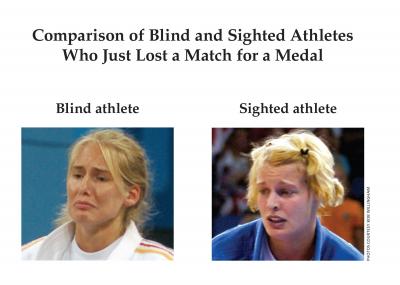
    Have you ever wondered if facial expression is learned from observation of other people, or if it is something  out of our control? For a long time people have thought that we learn how to express our emotions facially, from observing how people around us act in different situations. However, according to a study done in 2008, facial expressions of emotion are given by our genes. 
    This study is the first in it's area to demonstrate that blind individuals, use the same facial expressions as those who can see, and produce the same facial muscle movements in response to specific emotional stimuli. It provides a new insight on how people manage emotional displays, and suggests  that the ability to regulate emotional expressions is not learned through observation. In this study, a psychology Professor David Matsumoto compared the facial expressions of sighted and blind judo athletes at the 2004 Summer Olympics and Paralympic Games.His findings reveal that hat sighted and blind individuals manage their expressions of emotion in the same way according to social context. In his study he noticed that 85 percent of silver medalists who lost their medal matches produced "social smiles" during the ceremonies. Social smiles, are forced smiles that use only the mouth muscles,to cover up their true emotion with "happiness". True smiles,  cause the eyes to twinkle and narrow and the cheeks to rise. The losers tended to push their lower lip up as if to control the emotion on their face, an therefore produced social smiles. Participants of the study that were blind from birth, would never have the chance to earn to control their emotions in this way - through visual learning. Therefore there must be another mechanism that causes it. It is possible that  our emotions, and the systems to regulate them, are "leftovers" of our evolutionary ancestry


    I choose this article because all of the other ones submitted were either repeating each other and what I already shared on my blog, or did not have enough interesting facts behind it to interest me. This specific article,  - "Facial Expressions Of Emotion Are Innate, Not Learned" by Science Daily  - relates to our class discussions since it supports that emotions and how we express them are given to us by nature. Humans can connect to each other through emotions, as their vast range is what in fact makes us different from those who came before us. If both blind and sighted people react similarly with their emotions and their expression, then there is much more for us to learn and discover in the field of Psychology.


    Monday, October 17, 2011

    Culture of Emotions

    As we study emotions, we notice that the same emotions are experienced by all human beings; however the events that evoke them or the reactions they cause differ as we cross the cultural and gender lines. Culture and gender, likewise, play a role in the emotions we feel, how they are evoked, or how we express them. Although emotion recognition was thought of as largely universal, we have noticed differences between the way males and females display emotions. Usually, people of both genders feel the same types of emotions and the same intensity in during the same events, but it is the way we express them that differs across the gender line of one culture, and this causes a lot of stereotypes. It is not that women do not feel the same range of anger as men, but they are thought to not express such emotion. When angry, for example, women are then more likely to cry then to show any other more aggressive behavior. In the March 2000 issue of Psychology of Women Quarterly, studies are explained that work as evidence for this gender bias in emotions. The studies identified gender stereotypes of emotions, and the relationship between gender stereotypes and the interpretation of emotionally expressive behavior. Participants of these studies believed women experienced and expressed majority of the emotions studied - such as sadness, fear, sympathy - more often than men. Exceptions included anger and pride, which were thought to be experienced and expressed more often by men. In another study discussed in the issue, participants interpreted photographs of adults’ uncertain anger/sadness facial expressions in a stereotype-consistent manner. The results found that women were rated as sadder and less angry than men. Even definite anger expressed by women was rated as a mixture of anger and sadness. The discussion of these studies focused on the role of gender stereotypes in adults ’interpretations of emotional expressions, and the implications to social relations. Gender bias plays a huge role in the difference of emotion in genders. The two examples above, show two of the important roles and display rules that we feel we need to follow. The first example shows us that even though we feel the same emotions and at the same rate, we are often labeled differently on how often we feel a specific emotion compared to the opposite gender. On the other hand, when presented with an emotion that could be described as anger or sadness, women are stuck and labeled as sad, while men are labeled as angry. (Plant, Hyde, Keltener and Devine)                                                    

    Emotional differences occur not only between males and females, but between different cultures and ethnic backgrounds as well. In order to explore how differences across cultures may affect the universal processes involved in expressing and understanding emotions, in 1972 Ekman conducted his  five-culture study. Participants viewed photographs expressing emotions, and for each they selected an emotion that they thought was the correct answer - from six possible choices. Although this study is not the strongest evidence, as guessing entirely at random would yield one correct answer out of six, it provides us with plenty of support and new ideas that started out the current research on this topic. We could notice an interesting fact from this experiment, the group with the highest performance is also the same group from which the experimental stimuli originated. All participants  in the study viewed photographs of American facial expressions, therefore  Americans were the only participants of the study to view members of their own cultural group (in-group). Everyone else in the study judged expressions from a foreign group (out-group). It was interesting that the South American participants were only slightly less accurate than U.S. participants, whereas the difference in performance was larger for the Japanese, who were the most culturally distant. Therefore, the in-group advantage is lower when groups are nearer geographically or have greater cross-cultural contact with each other,. The implication that comes from this is that over time, participants appear to learn how to understand the emotions of people from foreign cultures, the more they interact with them.   
    Another example is a research conducted recently, which is holds a better argument for culture diversity in emotions. A study published in the April 2007 issue of The Journal of Experimental Social Psychology is a result from a collaborative study between Masaki Yuki (Hokkaido University), William Maddux (INSEAD) and Takahiko Masuda (University of Alberta). This study reveals that in cultures where it is normal to have your emotions under strict control, such as Japan, focus is placed on the eyes to interpret emotions. On the other hand, in cultures where emotion is openly expressed, such as the United States, the focus is on the mouth to interpret emotion. Across two studies, computerized icons and human images were used to compare how Japanese and American cultures interpreted images, which conveyed a range of emotions. Findings go against the popular theory that the facial expressions of basic emotions can be universally recognized. Culture plays a very strong role in determining how people perceive emotions, and this fact needs to be considered when interpreting facial expression.

    A very interesting point brought up by the study is present below: